Patio Cover Ideas for Eugene, Oregon Homeowners
Quick Summary: Eugene homeowners have several patio cover options to choose from, including solid roof covers, open pergolas, lattice covers, and attached shade structures. The right choice depends on how much weather protection you want, how you plan to use the space, and how the structure fits the look of your home.
Why a Patio Cover Makes Sense in the Pacific Northwest
Oregon's climate is one of the strongest arguments for adding a covered outdoor space. Eugene gets a significant amount of rain between fall and spring, and without some kind of overhead cover, outdoor living areas sit unused for a large portion of the year. A well-built patio cover extends the usable season of a backyard space and gives homeowners a place to spend time outside even when the weather is not cooperating.
Beyond weather protection, a covered patio or pergola adds visual structure to a backyard, creates a defined outdoor living area, and adds value to the property. For many Eugene homeowners it becomes one of the most used parts of the home.
Solid Roof Patio Covers
A solid roof patio cover provides the most complete weather protection of any covered structure. The roof is typically framed like a standard building and covered with roofing material that matches or complements the home. This type of cover keeps rain out entirely and can be insulated or fitted with lighting and ceiling fans, making the space genuinely comfortable in a wide range of weather conditions.
Solid roof covers are popular in Eugene because they address the rain problem directly. Homeowners who want to use their outdoor space through the fall and winter without constantly watching the forecast tend to prefer this option. They do require a permit, structural engineering consideration, and proper drainage, but the result is a highly functional outdoor room that holds up well in the Pacific Northwest climate.
Open Pergolas
A pergola is an open overhead structure typically built with posts, beams, and rafters that create a framework without a solid roof. Pergolas provide partial shade and a sense of enclosure without fully blocking the sky. They are a popular choice for homeowners who want to define an outdoor living area and add architectural interest without committing to a fully covered structure.
In Eugene, pergolas are most useful during the drier months of summer and early fall. They can be enhanced with climbing plants, string lights, or retractable shade canopies to add function and visual appeal. Some homeowners use a pergola as a starting point and add a polycarbonate or corrugated roof panel later to increase weather protection without changing the overall structure.
Lattice and Slatted Covers
Lattice and slatted roof covers fall between a solid roof and an open pergola in terms of coverage. They allow some light to filter through while providing partial shade and a degree of rain protection depending on the density of the slats. This style is popular for homeowners who want a more finished overhead structure than an open pergola but prefer the look of filtered light over a solid ceiling.
Slatted covers can be built in a variety of configurations and wood species, and they integrate well with decks and outdoor dining areas. The spacing of the slats can be adjusted depending on how much light and weather protection is desired for the specific space.
Attached vs. Freestanding Structures
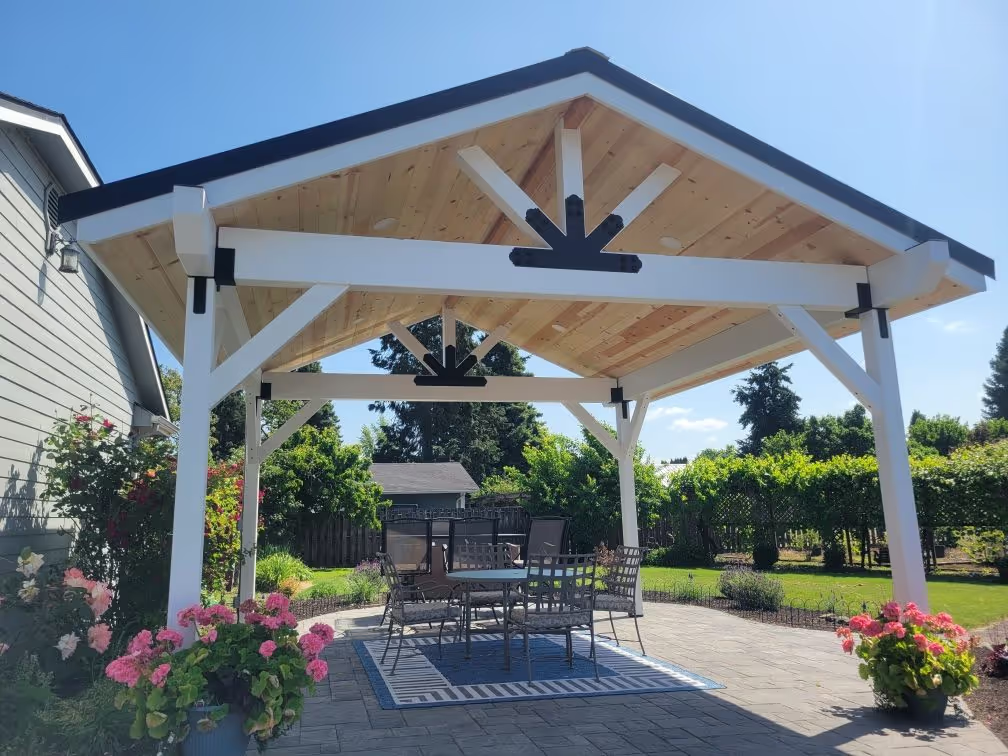
Patio covers can be attached directly to the home or built as freestanding structures in the yard. Attached covers connect to the house at the roofline or wall and are supported by posts on the outer edge. They are the most common configuration for covered patios because they create a natural transition from inside the home to the outdoor space.
Freestanding covers are built entirely on their own footings and posts, independent of the house. They are useful when a covered area is needed in a location away from the home, such as over a pool, hot tub, or garden seating area, or when the home's roofline makes an attached connection difficult.
Materials and Longevity
Wood is the most common material for patio covers in the Eugene area, with cedar being particularly popular because of its natural resistance to moisture and decay. A properly built and maintained cedar cover holds up well in Oregon's climate and has a warmth and character that is difficult to replicate with other materials.
Pressure treated lumber is another common choice for structural framing components, particularly posts and beams that are in contact with or close to the ground. Some homeowners opt for composite or aluminum components in areas where maintenance is a concern, though wood remains the dominant material for visible finish work.
What to Think About Before Building
The best patio cover for a given property depends on how the outdoor space will be used, the orientation of the home, existing landscaping, and how much weather protection is needed. An attached cover that faces north may need to be designed differently than one that faces west and receives direct afternoon sun.
Patio covers attached to the home typically require a permit in Eugene, and some freestanding structures may as well depending on size and placement. Laguna Building Company builds custom patio covers and pergolas throughout the Eugene area and handles the full process from design and permitting through construction. Homeowners considering adding a covered outdoor space are welcome to reach out for a free consultation.
Ready to Build Something Great?
Get your free quote today. No pressure, no runaround, just honest work from people who care.
GET A FREE QUOTE